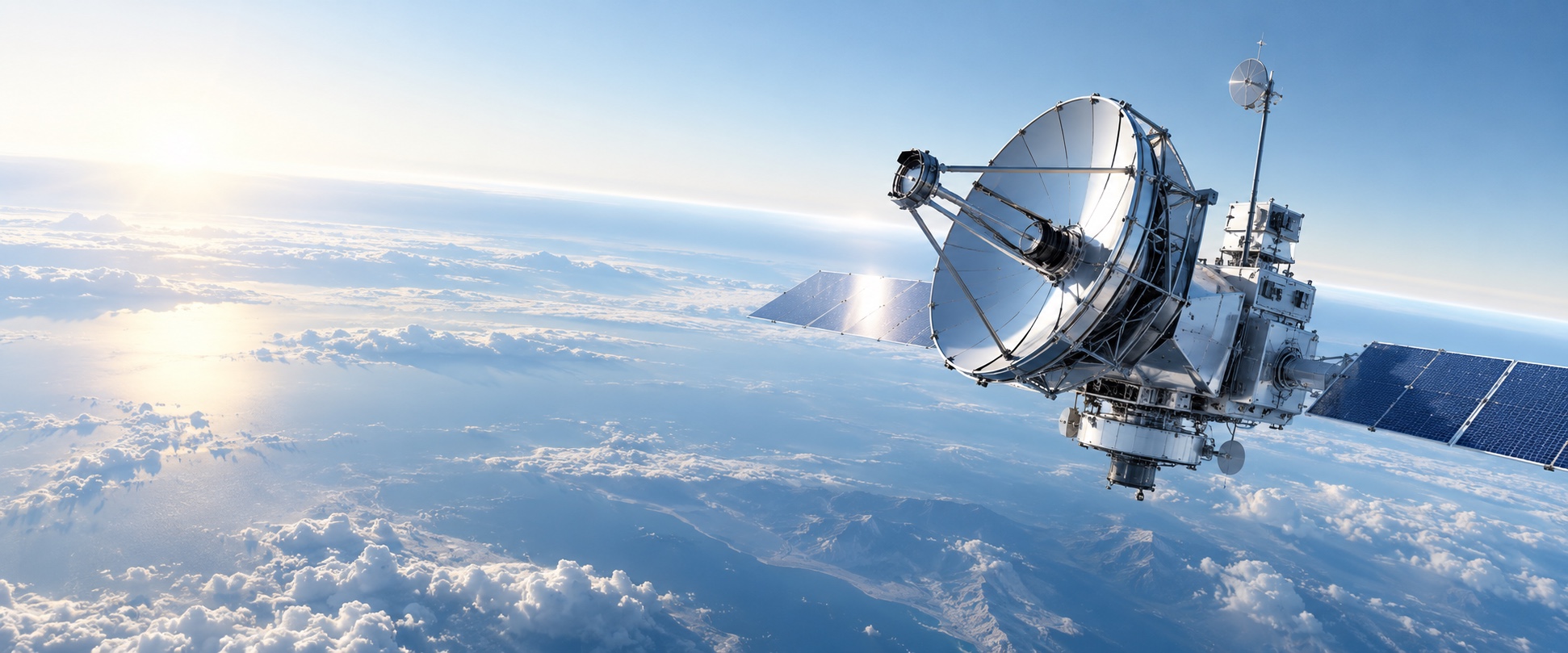
One telescope watches one point. A network of telescopes learns to see the sky as a single living process—continuously and across several wavelengths at once.
For a long time, progress in astronomy was measured by the diameter of a mirror. The larger it was, the fainter the light it could collect. That principle still holds, but another now matters too: the value of an observation also depends on how quickly instruments can coordinate.
Small orbital spacecraft can divide tasks, compare signals and instantly direct ground-based facilities toward brief events. A flare, transit or gravitational wave stops being one instrument’s lucky discovery and becomes a shared scene for the entire network.
The main difficulty is not optics but rhythm. A spacecraft must judge data quality on its own, conserve bandwidth and understand which observation cannot wait. The observatory of the future is therefore both a space fleet and a carefully trained editorial desk.
This approach does not replace large telescopes. It makes them more precise: the network spots an event, then a major instrument follows and examines it in detail. Astronomy moves from occasional snapshots toward a chronicle of the Universe.